

A processor announcement cannot tell you how long a particular laptop will last in your bag. Intel’s January 5 launch of Core Ultra Series 3 at CES makes a strong efficiency pitch, alongside graphics and AI capabilities. The useful next step is to connect those claims with the complete laptops that will use the chips.
Intel’s launch release identifies Series 3 as its first client platform built on Intel 18A. It says laptop preorders begin January 6, with the first systems available January 27 and additional designs following. At this stage, an announcement analysis should not read like a review of retail hardware.
The battery figure has a specific setting
Intel promotes up to 27 hours of battery life. The footnote ties that result to a particular reference design and video-playback test. It does not establish 27 hours of video meetings, compilation or a busy browser session on every Series 3 machine.
The distinction is familiar to anyone who has compared two laptops with the same processor family. Display choice and battery capacity affect what the system can deliver. Cooling and power settings also shape sustained performance. A chip’s capabilities are only part of the finished device.
That makes the original test conditions worth reading before comparing a launch number with an older computer. A useful comparison keeps the workload and configuration visible. Otherwise, the biggest number on the slide can describe a scenario that has little to do with the buyer’s working day.
AI hardware needs software that uses it
The launch includes an NPU, a processor intended for selected AI work, as well as updated CPU and graphics capabilities. An NPU performance figure describes one computing resource. It is not a general score for every application with an AI feature.
For someone buying a work laptop, the more revealing question is whether their actual software runs the relevant task locally and uses that hardware. A service that performs its main processing remotely may benefit differently from a local application.
The January rollout provides a clear sequence for evaluation: first the platform announcement, then individual systems and their specifications, followed by testing of those systems. For readers comparing everyday technology, the purchase decision belongs at the laptop level, where the screen, keyboard and ordinary battery behavior matter alongside the silicon.
Reporting & Sources
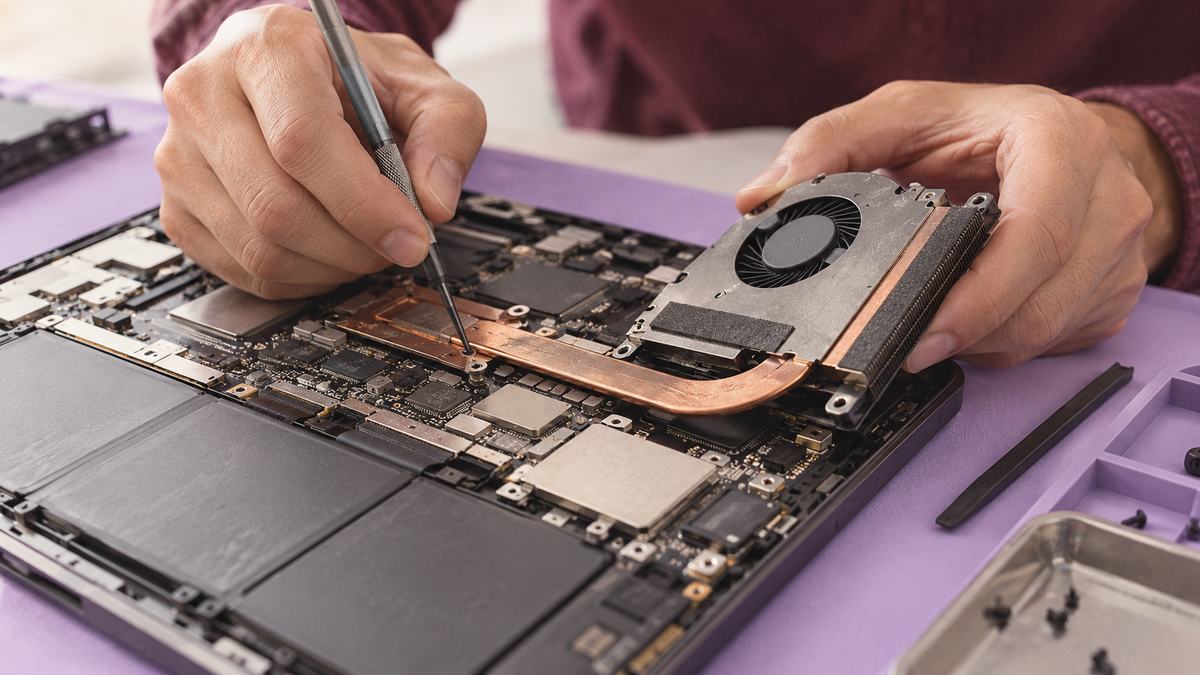
Based on Intel’s January 5, 2026 CES announcement and testing footnotes. Performance and battery figures are manufacturer claims. The cover is a general computing illustration, not a photograph of a Series 3 product.