

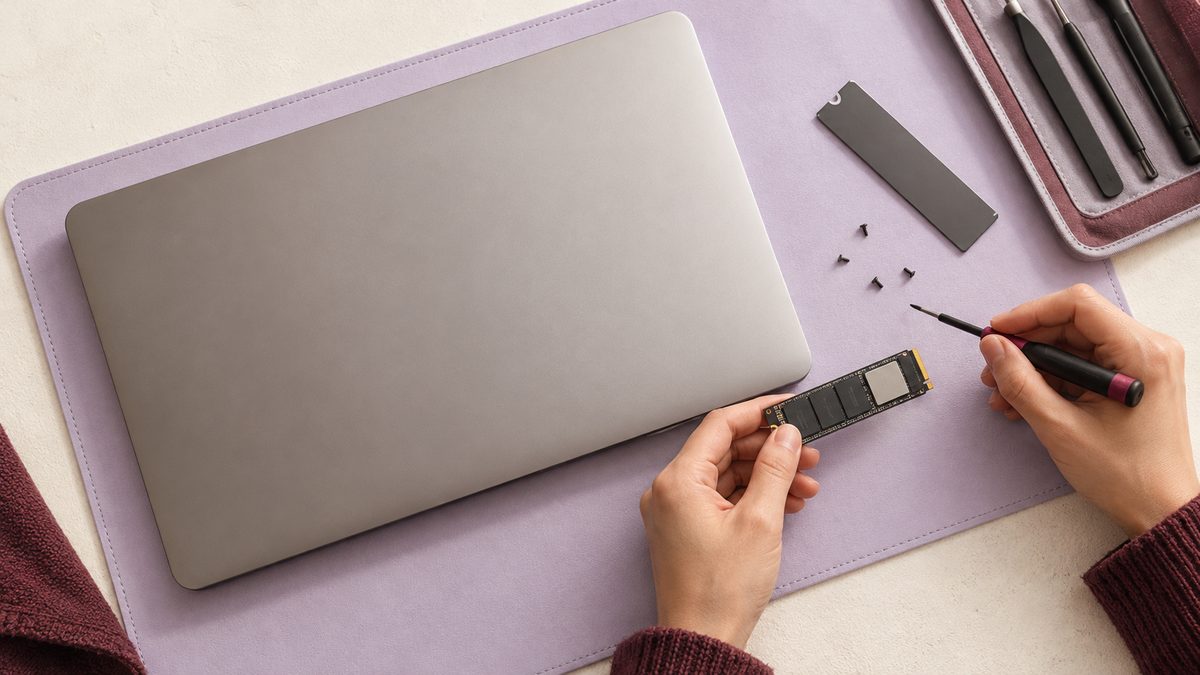
A laptop can feel constrained long before its processor runs out of ambition. Local photos, offline files and a few large applications can make storage the daily problem. Apple’s March 3 announcement of the M5 MacBook Air addresses that directly, moving the starting capacity to 512GB alongside the new chip.
Apple’s announcement covers 13-inch and 15-inch models. Preorders opened March 4, with availability scheduled for March 11. The facts here come from that announcement; they are not results from testing a retail unit.
A specification with an obvious use
Doubling the base storage changes the starting configuration buyers compare. It can mean more room for local working files before an external drive becomes part of the routine. Apple also describes storage options up to 4TB, although the appropriate capacity depends on the workload and budget.
A photographer and a browser-based project manager can reasonably make different choices. The photographer may keep large source files locally, while the project manager may care more about a comfortable screen and enough room for occasional offline work. A launch comparison becomes more useful when it starts with those habits.
Apple also introduces its N1 wireless chip to the Air, with Wi-Fi 7 and Bluetooth 6 support. Those specifications describe the laptop’s capabilities. They do not upgrade an existing router or guarantee a faster connection on a congested network.
Read the performance claims in context
The release makes substantial claims about AI performance and gives a battery-life figure of up to 18 hours. Those numbers depend on Apple’s chosen comparisons and test conditions. They should not be read as a promise that every application is several times faster or that every working day lasts 18 hours on battery.
The fanless design remains part of the Air’s appeal for everyday use. At the same time, someone doing long, sustained processing should consider how their actual workload behaves rather than choosing from a single launch benchmark.
Other details are more straightforward to compare: two Thunderbolt 4 ports, support for up to two external displays and the choice of screen size. They determine whether a desk setup fits without an awkward change of routine.
A useful hardware comparison can start with the files that need to stay on the machine and the displays already on the desk. Those requirements give the new storage and connectivity specifications an immediate meaning.
Reporting & Sources
Based on Apple’s March 3, 2026 MacBook Air announcement. Battery and performance claims are Apple’s; purchasing considerations are editorial analysis.