

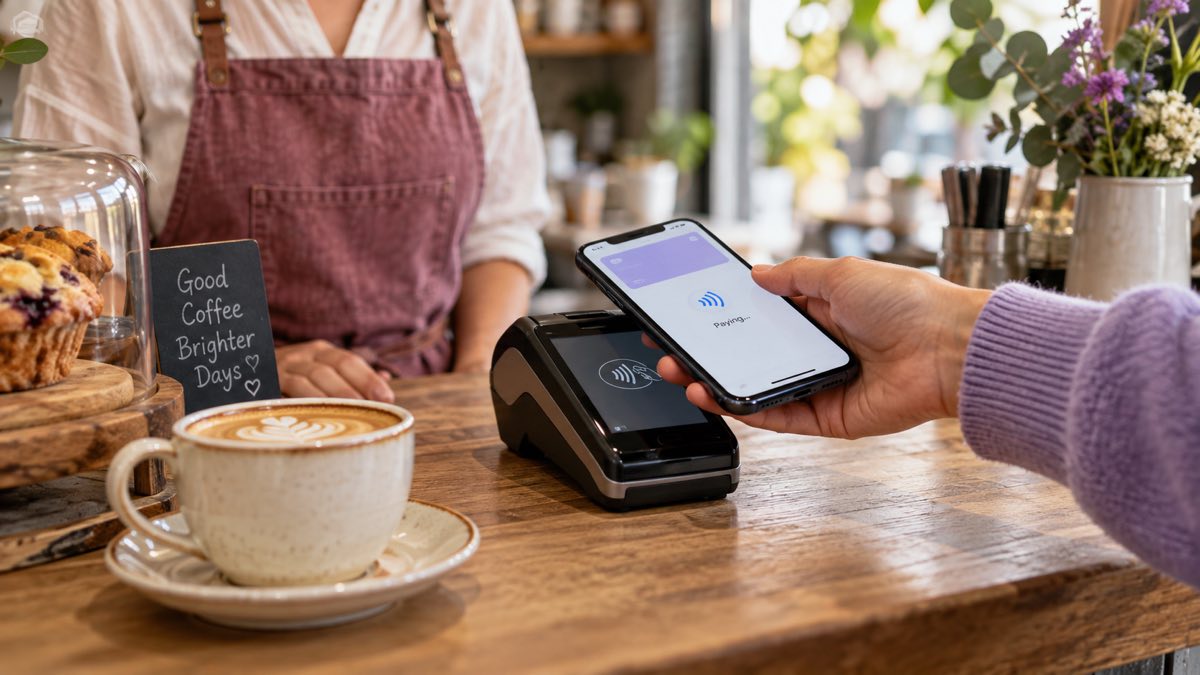
A checkout can remove the card form, remember a customer and still leave them uncertain about their order. For product teams, the difficult part of an “invisible” payment is deciding which details to hide and which facts the customer must be able to see.
Why it matters: Less effort is useful. Less information about a charge, delay or failure can turn a small problem into a support conversation.
A payment has more than two states
Stripe’s PaymentIntent documentation describes a sequence that may include a missing payment method, customer authentication, processing and success. Some payment methods settle asynchronously. A loading animation cannot communicate all of those situations.
This is one provider’s model, not a universal description of banking. Its broader design lesson is useful: an application should distinguish a request it received from a payment it completed. “We have your order” and “Your payment succeeded” make different promises.
The interface does not need to expose internal state names. It does need language that corresponds to them. A customer who must authenticate needs an action; someone whose payment is processing needs a status and a way to return later.
Remembering a card is a separate decision
Stripe distinguishes PaymentIntents, used to collect a payment, from SetupIntents, used to prepare payment credentials for future use. Saving a method is not the same event as taking money.
That separation should survive in the product. A saved card should be recognizable and removable through an appropriate account flow. A later charge should have an understandable reason. These are design recommendations, not a claim that a particular integration already behaves this way.
The same principle applies to embedded financial services: see Embedded Finance Has a Trust Problem, Not a Feature Problem for the responsibilities that can disappear behind a polished interface.
Put the receipt back in the experience
After a successful payment, provide a durable record with the merchant, amount, currency and relevant order information. During a delay, retain the customer’s context instead of asking them to start again without knowing whether the first attempt worked.
A team can review this with a small state map: what happened, what the customer sees, what they can do and who handles an exception. The best checkout may feel almost absent during the purchase. It should become easy to understand the moment someone has a question.
Reporting & Sources
Product analysis based on provider documentation, reviewed September 26, 2026. No checkout was independently tested for this article.