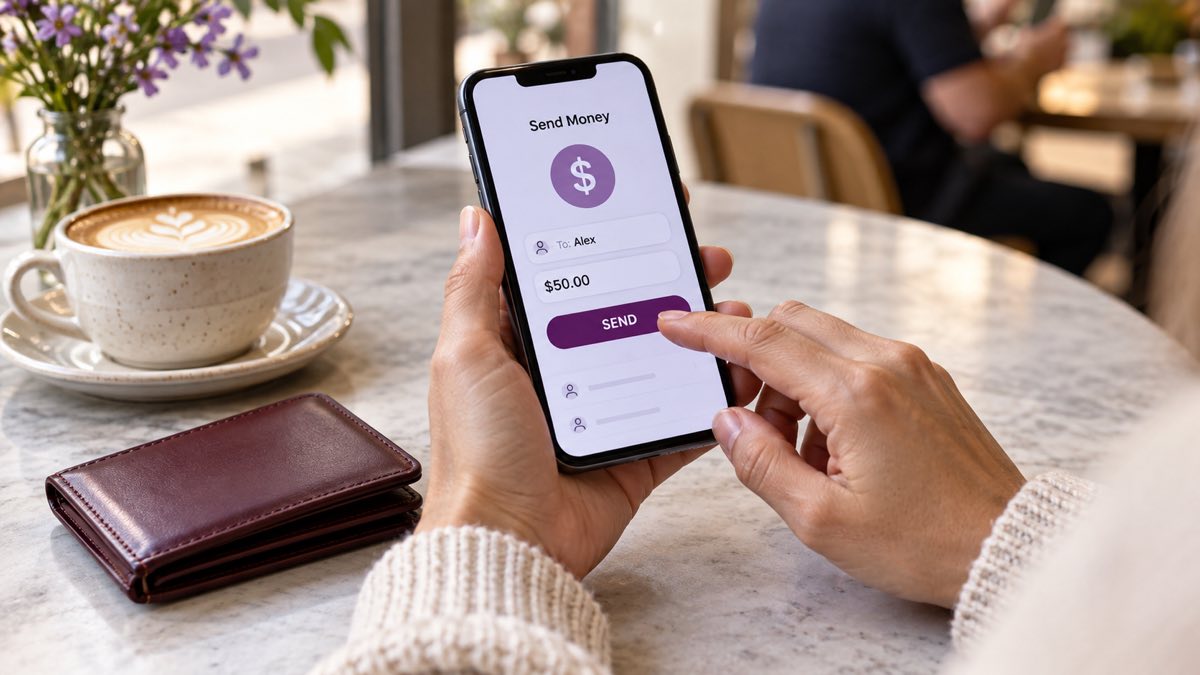
Stablecoins become interesting as a product component when they remove a step a customer would otherwise have to understand. Paying a network fee without first acquiring a second token is one example. The design question is who performs the hidden work, what it costs and what happens when it fails.
Why it matters: A simpler wallet can make an on-chain action easier to use without making its infrastructure free or riskless.
A fee can move behind the interface
Circle’s Paymaster announcement describes a service through which compatible smart-account users can pay gas fees in USDC while the underlying network transaction is paid in its native token. The announcement was published in January 2025 and updated in April 2026; it is a product example, not a new launch reported today.
The useful change is in the user’s preparation. They may no longer need to obtain a separate gas token for that supported transaction. The service still has to fund network execution.
Availability and compatibility depend on the wallet, account implementation, chain and service configuration. A stablecoin balance alone does not establish that any arbitrary transaction can use this arrangement.
Someone still owns the difficult parts
A product built around stablecoin payments needs to explain more than the transfer button. It needs understandable fee quotes, clear asset and network identification, and a route for resolving an unsuccessful attempt.
The provider’s role also matters. Stablecoin issuer arrangements, account permissions and fee-service dependencies are distinct from the base network. Combining them into one screen should not erase those distinctions in the product’s documentation.
These observations concern product architecture. They do not assess the suitability of a stablecoin as an investment or make a claim that a particular asset will always preserve its value.
Judge the complete transaction
A useful review follows one intended payment from available funds to a confirmed outcome. Note each conversion, approval, dependency and recovery step. Ask what the user must hold beforehand and what remains afterward.
For a more detailed breakdown, see The Real Cost of Moving Money On-Chain. For account permissions and recovery, see Wallet UX Still Decides Whether Crypto Feels Useful.
“Product layer” is our description of this design role: stablecoins can become the unit a person sees while other systems perform the settlement work. Whether that is genuinely simpler depends on the whole journey, including the exception screen.
Reporting & Sources
Product analysis, reviewed September 26, 2026. Provider descriptions were not independently benchmarked.